


The Best of It 
A journal of life, love and dying
Valerie Stein
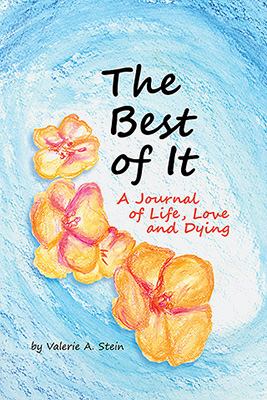
From the time she was a very young woman, Valerie Stein has found comfort and vision in writing. Journaling and writing songs and poetry have long been part of her creative nature.
Valerie was 21 when her mother was diagnosed with idiopathic cardiomyopathy, an untreatable condition of the heart. Writing became solace through this time, during which Valerie and her sister, Kathie, helped their father take care of their mother and the small family farm on which they lived.
Using journal entries and other writings from the time surrounding her mother's illness and subsequent death from heart disease, Valerie tells the story of a family coping with terminal illness. What shines through is the determination to seek peace, or even joy, in a time that can seem filled with utter darkness, fear, and despair.
This book was begun 6 months after Valerie's mother died in 1983. At its completion more than 25 years later, its message remains vital for families facing the loss of a loved one. It reaches into the depths of the struggle toward acceptance, the nature of caring, and the supportive connections of family.
Ultimately, the heartfelt message of The Best Of It is one of hope and courage.
"We hoped that we might give our mother all the love and support she so richly deserved," writes Valerie. "We hoped for wellness in her spirit. We could no longer bring ourselves to hope for the healing of her body."
 Featured
Books
About
Contact Featured
Books
About
Contact |
|
|
Homeostasis Press 5919 147th St. SW Edmonds WA 98026 |
Valerie Stein, Publisher (425) 905-5297 books@homeostasispress.com |