


Book summaries
Brief summaries of books currently published by Homeostasis Press.
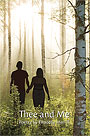
Thee and Me 
Poetry by Timothy Merrill
Timothy Merrill
Timothy Merrill has had a wide range of jobs including photo journalist, copy reader, editor, ferryman, and carpenter. His work explores the mystery behind the oneness of all life.
In this, his latest book, Timothy explores the mystery behind the oneness of all life. These poems about relationships, realizations, and love show us that ....
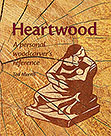
Heartwood
A personal woodcarver's reference
Ted Merrill
Ted Merrill, a lifelong physician and surgeon, writes from 80 years of woodcarving experience, and his style is clear, honest, and captivating. His journey with wood began when, as a young boy, he first applied a pocket knife to a piece of pine. Since then, he has often recorded his observations about the varieties of wood he encountered.
Heartwood: A personal woodcarver’s reference is part technical manual, part design guide, and part storyteller’s homage to the art and craft of woodcarving.
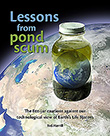
Lessons from Pond Scum
The Eco-jar cautions against our technological view of Earth’s Life System
Ted Merrill
What if our Earth was completely self-contained? What if no fresh supplies could be brought in and no garbage could be removed? If that were true, would you change your behavior or your thinking?
Well, it IS true! But is there time to make the necessary changes?
Ted Merrill, a lifelong physician and ecologist, offers the Eco-jar as a working model of Planet Earth.
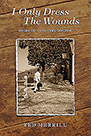
I Only Dress the Wounds
Notes of a country doctor
Ted Merrill
Even as a child, Ted Merrill was deeply fascinated with life and living things. As early as eighth grade, he was reading about medicine and discussing it with the only doctor in his tiny home town of Fairfield, Idaho. Those early experiences are the subject of one of the 65 broadly chronological stories in I Only Dress the Wounds.
These highly personal stories chronicle Ted's education, family, and career, and as he points out in the introduction, "The stories are true and the names are real."
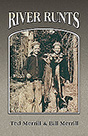
River Runts
Ted Merrill and Bill Merrill
Many years ago, as young parents, brothers Ted and Bill Merrill both told their children stories of their childhood days near the Sawtooth Mountains in central Idaho. Even as adults, their children lovingly referred to those stories as "exciting adventures from Dad's childhood."
Retired and in their seventies, Ted and Bill began exchanging their versions of those stories, helping each other firm up and flesh out their memories of those "exciting adventures." That 10-year, on-and-off collaboration resulted in the publication of River Runts, which is now in its third edition.
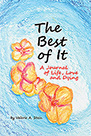
The Best of It
A journal of life, love and dying
Valerie Stein
From the time she was a very young woman, Valerie Stein has found comfort and vision in writing. Journaling and writing songs and poetry have long been part of her creative nature.
Valerie was 21 when her mother was diagnosed with idiopathic cardiomyopathy, an untreatable condition of the heart. Writing became solace through this time, during which Valerie and her sister, Kathie, helped their father take care of their mother and the small family farm on which they lived.
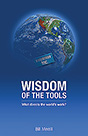
Wisdom of the Tools
What directs the world's work?
Bill Merrill
Wisdom of the Tools is a remarkable examination and critique of a central issue of our time: who controls the energy that powers modern urban-industrial societies?
This book was conceived and mostly written in the late 1960s, yet it is not only relevant to our modern day, but also eerily predictive of current trends. It draws on his experiences living close to nature as a boy and observing natural processes in the Pacific Northwest as a young adult.
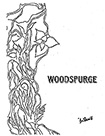
Woodspurge
Jo Merrill
Woodspurge is a posthumous collection of poems by Jo Merrill, who died in 2002. Her husband Bill self-published this collection in 2004 as a memorial to Jo, and it received an Honorable Mention in the Writers' Digest 11th Annual International Self-Published Book Awards that year. Bill republished it with Homeostasis Press in 2006.
Jo's poetry is striking for its qualities of verbal imagination, wit, auditory playfulness, and love of language. She is sharply attentive to the details of the world, and the resulting work is full of metaphysical energy.
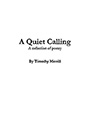
A Quiet Calling
A collection of poetry
Timothy Merrill
This book consists of 78 clear and intimate glimpses into many aspects of Timothy Merrill's life. They range from a 3-line critique of the laws of the solar system to reflections on light, on love, on language and remembering, on cringing at a horse being shod, and on the meanings and doings of God.
With this remarkably diverse collection, Tim Merrill has reaffirmed his right to the mantle of poet.
 Featured
Books
About
Contact Featured
Books
About
Contact |
|
|
Homeostasis Press 5919 147th St. SW Edmonds WA 98026 |
Valerie Stein, Publisher (425) 905-5297 books@homeostasispress.com |